The native setting gives Queen Califia's Magical Circle a context beyond its mosaic surfaces. The sculpture garden can be read as an enclosed artwork, but its surroundings invite a wider view: trees and shrubs, the park's natural habitat, and the vegetation of inland Southern California. These are related subjects with different scales. The planting beside a sculpture is part of the garden's composition; a regional plant community describes a much larger living landscape. Keeping that distinction in mind makes both subjects easier to understand.
Planting within and beyond the wall
Wikipedia's article on the garden places native trees and shrubs inside the plaza as well as outside the enclosing wall. Planting is therefore present on either side of the garden's boundary, rather than confined to a distant backdrop. A description of the circle that follows only its figures and reflective surfaces misses this quieter part of the setting. The garden guide follows the relationship between the enclosed plaza and the larger park.
Green foliage and a mosaic surface invite different kinds of looking. The garden's materials can be discussed through their cut edges, patterns and reflective qualities; a tree is better approached through its branching, leaves and changing outline. That comparison is a way to attend to the setting, without assigning a symbolic role to a plant or claiming that every shrub represents an idea. Native planting can be appreciated as planting, alongside the artist's work.
A park with natural habitat
Wikipedia's account of Kit Carson Park distinguishes developed recreation areas from land preserved as natural habitat, with the latter occupying most of the park. The setting is therefore broader than an ornamental bed around an artwork. Natural habitat and a municipal recreation landscape share the same park, and the sculpture garden belongs within that larger context. The page on Kit Carson Park and Escondido explains the relationship between garden, park and city.
A preserved area need not look like a neatly arranged garden. For a reader interested in landscape, the useful question is how vegetation occupies the ground: as trees, a low cover, a dense shrub layer or an open grassy area. These forms offer a vocabulary for describing what is visible without guessing at a species name. The native landscape is worth attention on its own terms, rather than as a blank space between recreation areas.
The inland vegetation vocabulary
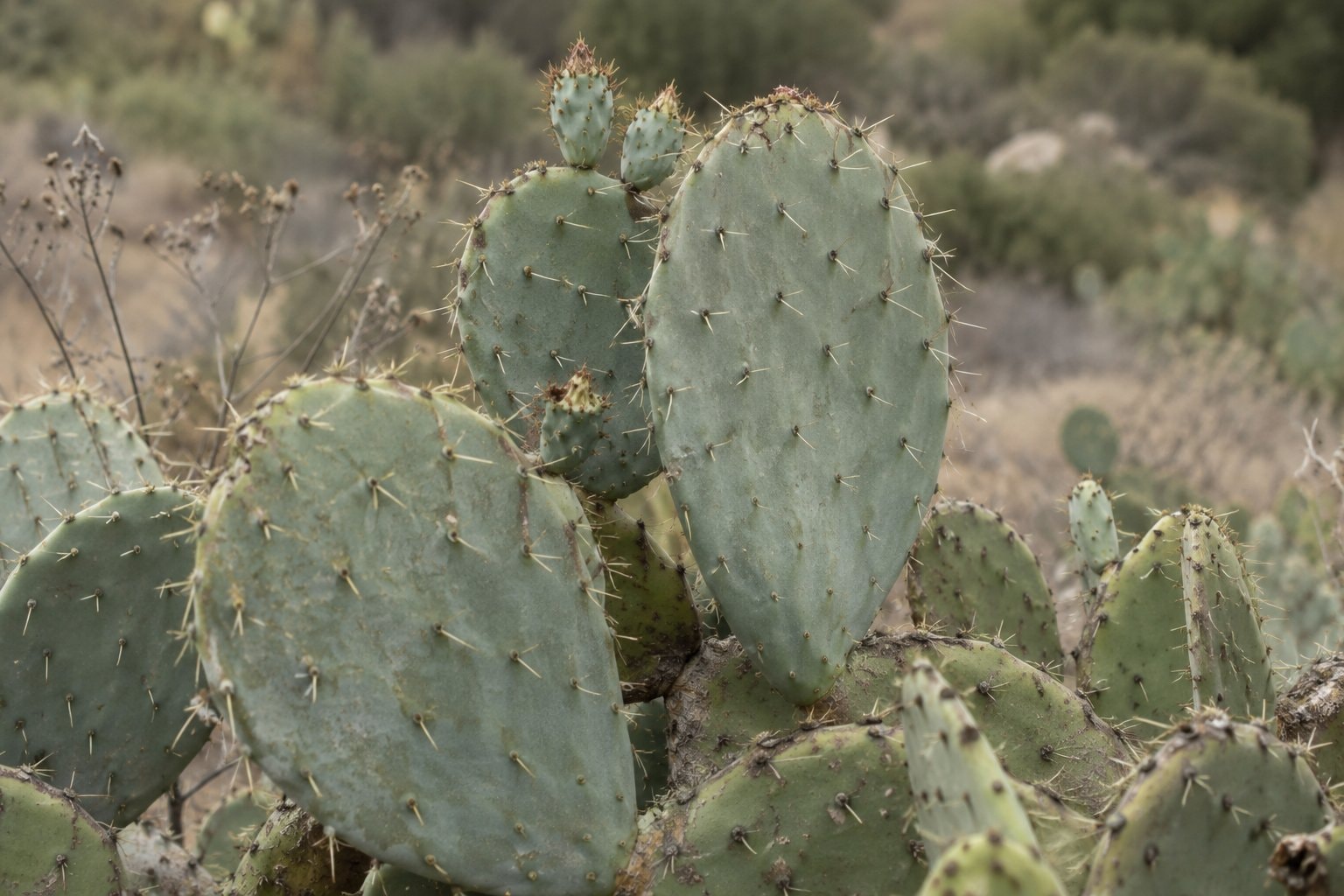
Wikipedia's account of Escondido lists chaparral brushland, oak woodland, streamside woodland and grassland among the area's natural vegetation types, and describes summers inland as hotter than those on the coast. These are regional descriptions, not a planting list for the sculpture garden. Woodland draws attention to trees; grassland to an open plant cover; streamside woodland to the relationship between vegetation and water. Chaparral is a shrubland community rather than a name for a particular shrub.
This vocabulary helps keep landscape description precise. A green hillside does not identify its plants, and the presence of an oak does not settle which kind of oak it is. The garden's documented native trees and shrubs can be described confidently at that level. More specific plant names belong to the wider regional background unless a reliable account identifies them at the garden itself. An attractive photograph alone cannot make that identification.
Coastal sage scrub and chaparral
Wikipedia's coastal sage scrub article describes a community of low-growing, aromatic shrubs, many with soft leaves that are shed in dry conditions. Its chaparral article describes a contrasting shrubland in which hard, evergreen leaves are common. These accounts concern plant communities across a region. They help explain why the general word scrub can conceal meaningful differences in plant form, without implying that either community has been surveyed inside the sculpture garden.
The contrast is useful for looking at landscape structure. A soft, low shrub cover and a dense evergreen thicket need not create the same impression, even when both are called brush. Plant community names gather together relationships among plants and climate; they do not describe a designed border. The terms also leave room for variation within a place. There is no need to turn the garden visit into a checklist of supposedly present species.
The coast live oak as regional background
Wikipedia's coast live oak article describes a native oak that retains living leaves throughout the year, adding young leaves while shedding older ones. It also describes the species as a prominent tree of woodland habitat. This is background about the coast live oak, not a claim that a particular tree at Queen Califia's Magical Circle belongs to that species. The distinction allows a discussion of a familiar California tree without attaching an unsupported label to the garden.
Learning more about native planting
The California Native Plant Society presents Calscape as a resource for California native plants and native-plant gardening. Its subject is the selection and understanding of local plants, rather than the identification of this garden's planting. Readers interested in the landscape can follow that subject separately from the artwork. The mosaic materials page offers the complementary view: a close look at the made surfaces within their living setting.